
Many engineering teams still keep API keys, database passwords, and cloud tokens in .env files. HashiCorp Vault secrets management replaces that model with a centralized, audited, policy-controlled secret store. The change matters for MERN stack applications and for any system that depends on CI/CD, Kubernetes, or multiple environments.
Key points
- .env files create exposure, drift, and blind spots for secrets.
- Vault centralizes encrypted storage, access policies, dynamic secrets, and audit logs.
- MERN teams can protect database credentials, API keys, JWT secrets, and OAuth tokens.

Why .env files fail for secrets management
The .env approach is convenient during local development, but it becomes risky as projects grow. Teams often store these files unencrypted on laptops or in repositories, copy them manually between dev, staging, and production, and can expose them through version control or logs. There is also no record of who accessed a secret or when.
How HashiCorp Vault secrets management works
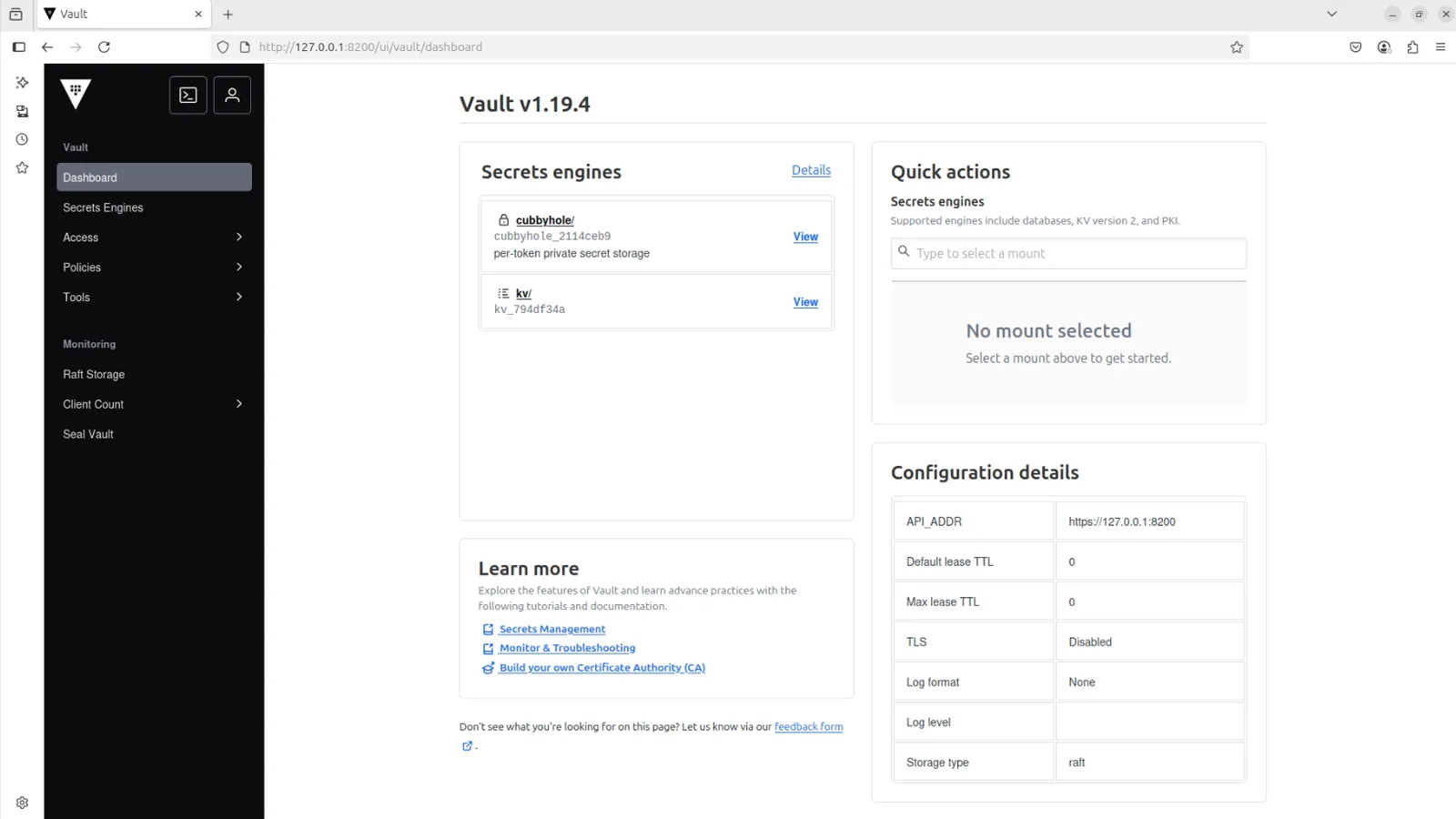
HashiCorp Vault is a tool for managing, distributing, and accessing secrets securely. Since 2023 it has been source-available under the Business Source License; OpenBao is the open source fork. Instead of scattering credentials across projects, teams read secrets from Vault at runtime or inject them through an agent. Vault encrypts secrets at rest, controls access with policies, rotates dynamic credentials, and writes audit logs.
Key features of Vault include:
- Secret engines for key/value data, database credentials, cloud tokens, and more
- Fine-grained access control using policy-based permissions
- Dynamic secrets that expire automatically
- Audit logs for visibility and compliance
- Encryption-as-a-service through the transit engine; Vault does not store the data it encrypts
- Integration with identity providers such as GitHub, LDAP, and Kubernetes
What Vault can manage in a MERN stack
For teams building with MERN (MongoDB, Express.js, React, Node.js), Vault can manage:
- MongoDB URIs and database credentials
- API keys for third-party services such as AWS, Stripe, or Twilio
- JWT secrets and public/private key pairs
- OAuth credentials for GitHub, Google, and other providers
Vault secret engines overview
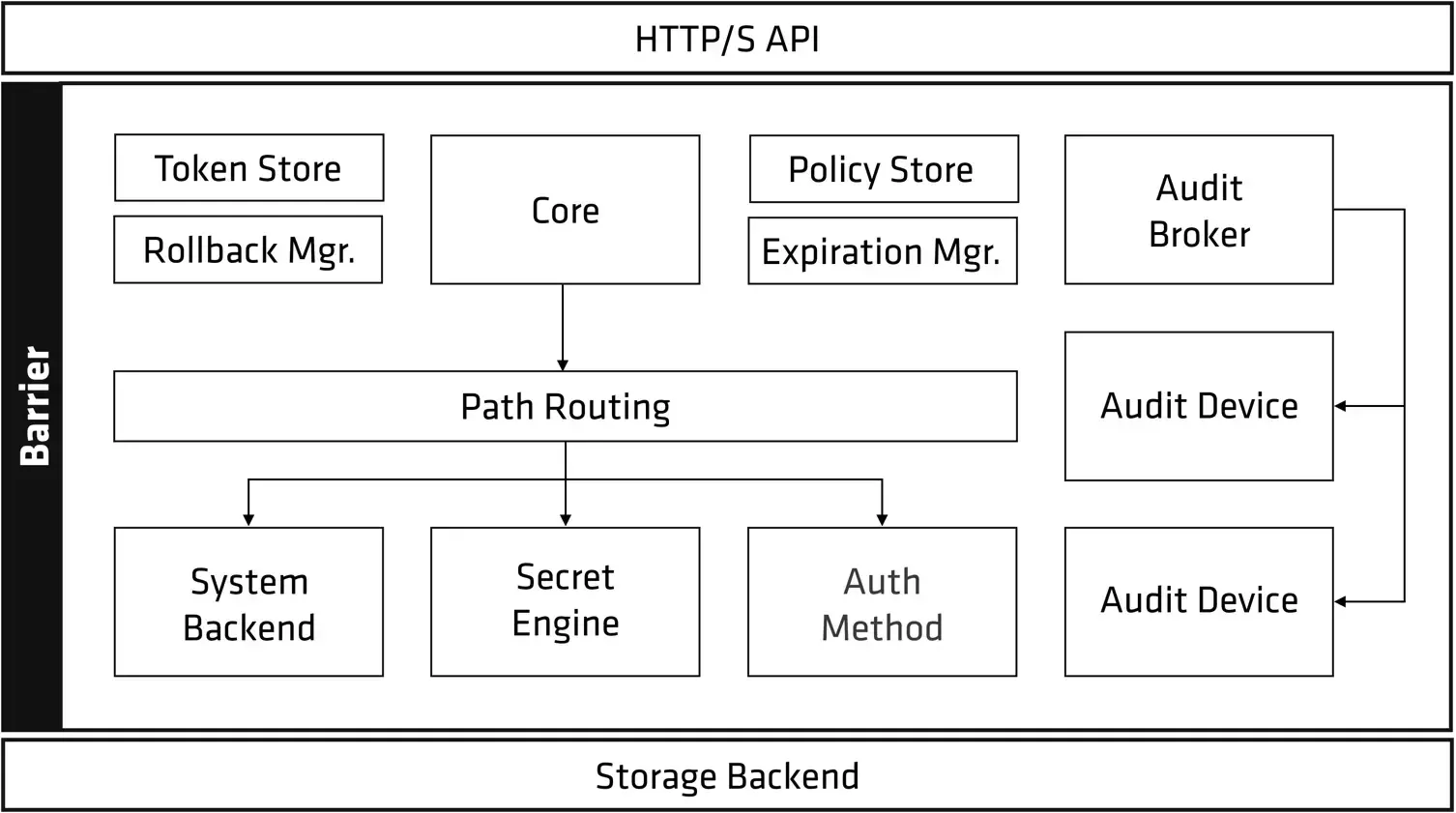
Secret engines are modular backends in Vault that handle different types of secrets and configurations. Common secret engines include:
- Key/Value: static secrets such as API keys and passwords
- Database: database users with dynamic credentials and TTLs
- AWS: temporary AWS IAM credentials
- Transit: encrypt and decrypt application data without storing it
- PKI: short-lived TLS certificates
How teams use Vault in production
Vault is widely used in production environments by engineering teams for CI/CD, Kubernetes, compliance, and multi-environment configuration.
CI/CD pipelines
Secrets are retrieved at runtime instead of being stored in the codebase. CI systems such as GitHub Actions, Jenkins, and GitLab authenticate with Vault to fetch secrets securely.
Kubernetes and microservices
Vault Agent or the Vault Sidecar Injector injects secrets into containers. Pods stay stateless and secrets remain externally managed.
Audit and compliance
All secret access is logged. Short-lived or revoked credentials reduce the attack surface and help with regulations such as GDPR.
Multi-environment configs
Dev, test, staging, and production can store secrets under separate paths such as dev/mongodb and prod/mongodb, with policies controlling access per path.
Vault vs .env files
Vault changes the operating model from copying files between machines to enforcing access through one control plane.
| Feature | .env Files | Vault |
|---|---|---|
| Encrypted Storage | No | Yes |
| Access Control | No | Yes |
| Audit Logging | No | Yes |
| Dynamic Secrets | No | Yes |
| Secret Versioning | No | Yes |
| Centralized Management | No | Yes |
Best practices for Vault secrets management
- Avoid storing .env files in source control. Fetch secrets from Vault at runtime or inject them securely.
- Adopt Vault from day one, even in development environments.
- Apply short TTLs to dynamic secrets and rotate them frequently.
- Integrate Vault Agent or SDKs to automate secret handling.
- Use policies to control access by environment or team role.
Vault gives teams a consistent, auditable way to manage secrets across application infrastructure. It removes hardcoded credentials and shared .env files, and adds auditability and automation to configuration workflows. For MERN stack applications, Node.js backends, React apps, or cloud-native systems, that improves security posture and operational efficiency.
Security is not only about avoiding breaches; it is about building dependable systems that are secure by design. Vault makes that easier.
FAQ
Is HashiCorp Vault only for large enterprises?
No. Vault works for small projects and teams, especially when multiple environments or CI/CD pipelines need consistent secret access. It can run as a lightweight service or managed offering depending on operational needs.
How does Vault differ from using environment variables in a platform?
Environment variables still require someone or something to supply values, and they can leak through logs or process inspection. Vault centralizes secret storage, enforces policy-based access, and can generate short-lived dynamic credentials that platform variables alone do not expire or audit.
Can Vault manage secrets for a MERN stack in Kubernetes?
Yes. Vault Agent or the Vault Sidecar Injector can inject secrets into containers running MongoDB, Express, React, or Node.js workloads. Policies control which pod or service identity can read a given path.