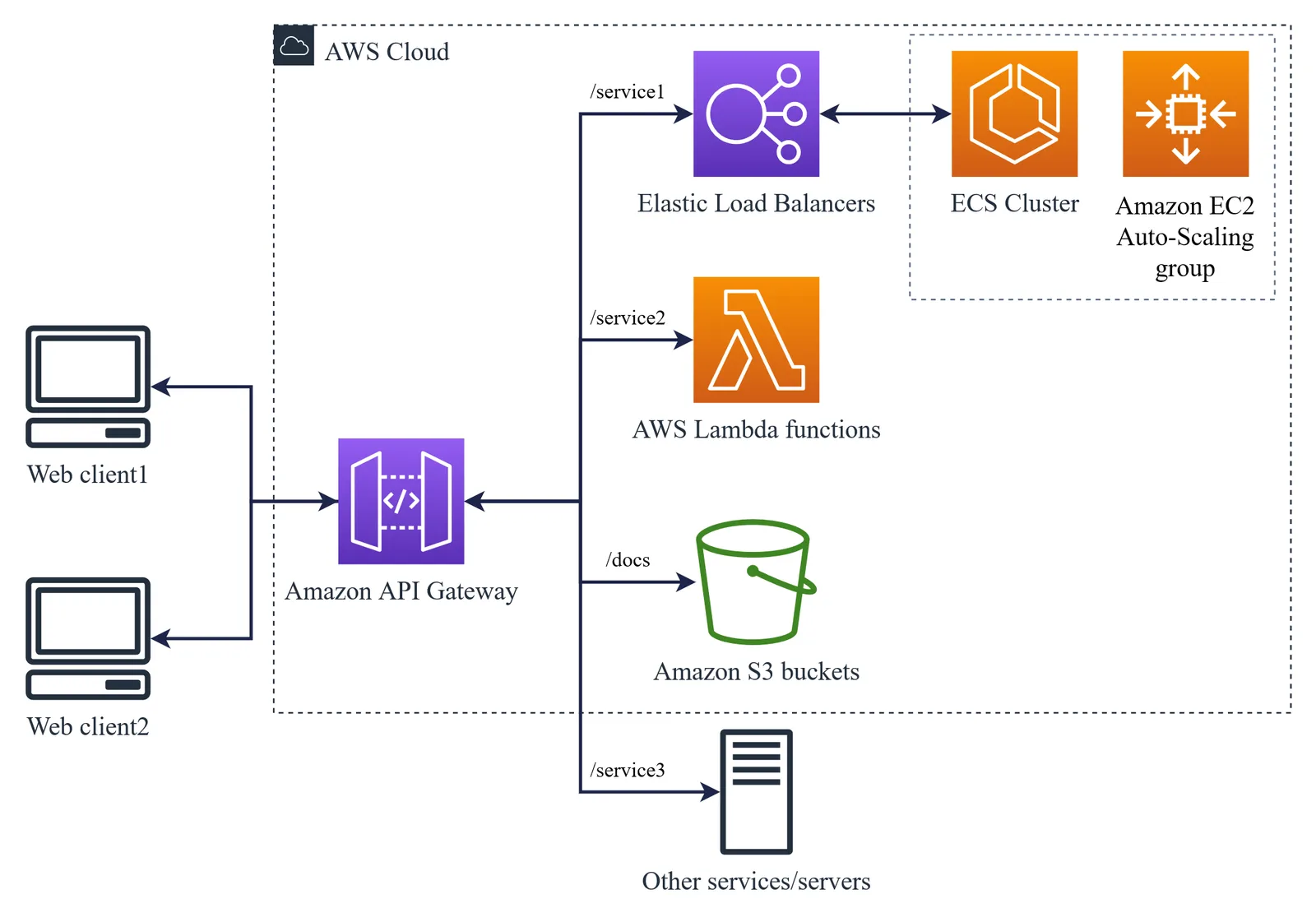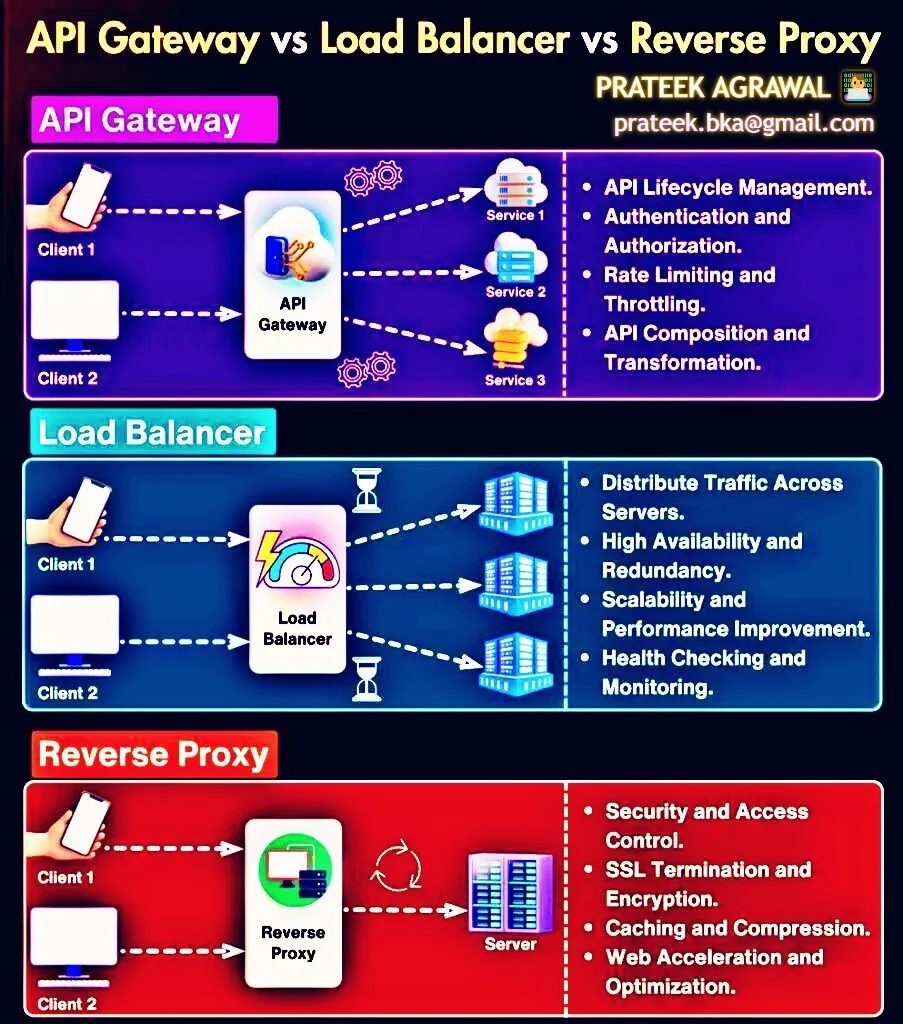
When you compare a load balancer vs reverse proxy vs API gateway, the terms sound like three ways to put something in front of a server. They all sit between clients and backend services, but each one solves a different problem. If you design microservices, you need to know where each one belongs.
Key points
- A load balancer spreads traffic across multiple servers for availability and scale.
- A reverse proxy is the edge of your server stack; it terminates TLS, hides internals, and can cache.
- An API gateway centralizes API security, transformation, versioning, and monitoring.
What is a Load Balancer?
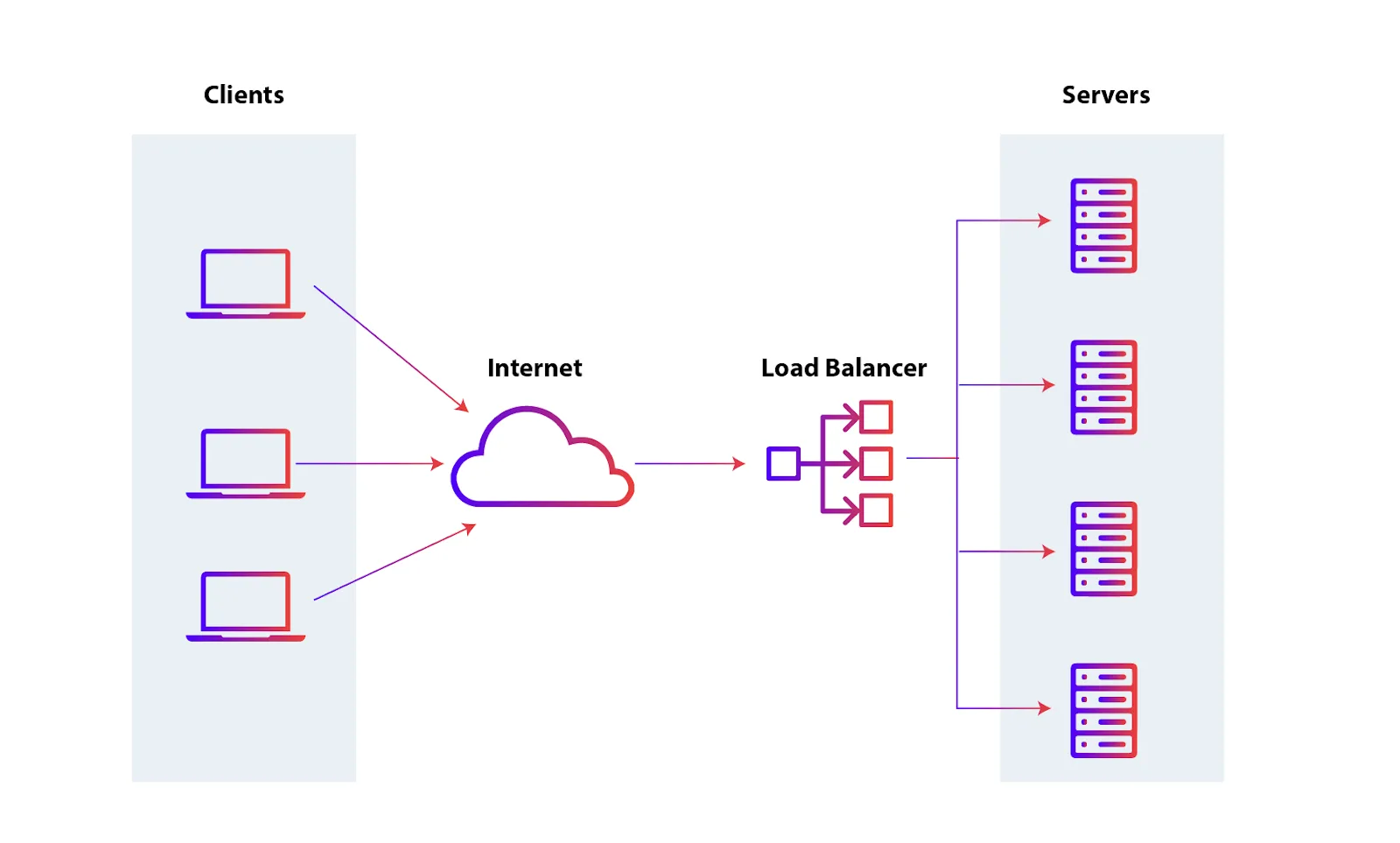
A load balancer distributes incoming traffic across multiple backend servers. Its main goal is to prevent any single server from becoming a bottleneck.
This matters when traffic grows. Instead of making one server bigger, you add more server instances. That is horizontal scalability. A load balancer sits in front of those instances and decides which one should handle each request.
Most load balancers also run health checks. If an instance fails, the load balancer marks it unhealthy and stops sending traffic to it. That failover behavior improves high availability.
Routing decisions can be based on load, client IP, latency, or more advanced rules. Common algorithms include round robin, least connections, and IP hash. Round robin cycles through servers in order. Least connections sends traffic to the server with the fewest active connections. IP hash maps a client IP to the same server, which can help with session consistency.
Some load balancers work at layer 4 and forward TCP or UDP connections. Others work at layer 7 and make decisions based on HTTP headers, paths, or cookies.
Popular choices:
- AWS Elastic Load Balancer (ELB)
- HAProxy
- NGINX in load-balancing mode
What is a Reverse Proxy?
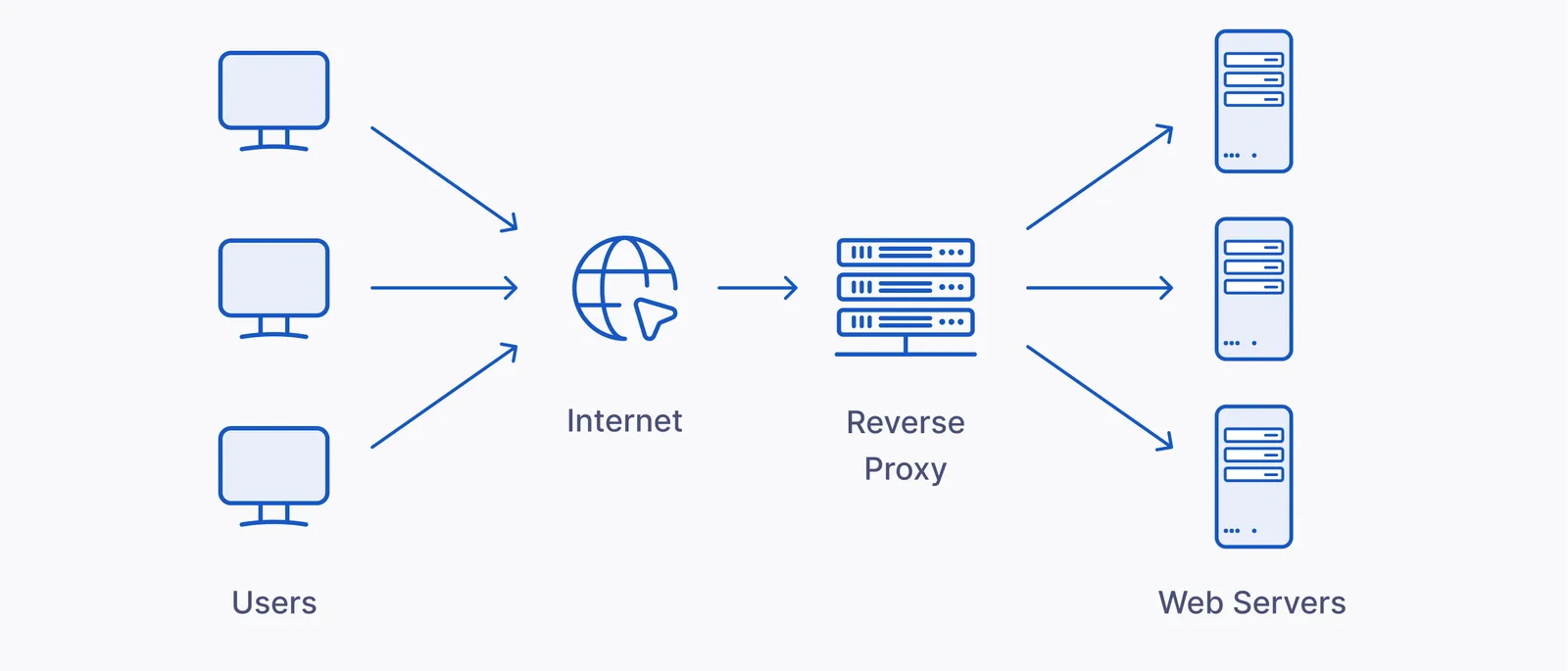
A reverse proxy sits between clients and your backend servers. It forwards incoming requests to the appropriate server and returns the response to the client. Clients only know the proxy address, not the internal servers behind it.
A common reverse proxy use case is SSL/TLS termination at the edge. The encrypted connection from the client ends at the reverse proxy. The proxy can then forward plain HTTP inside your private network. This centralizes certificate management and offloads encryption work from backend servers.