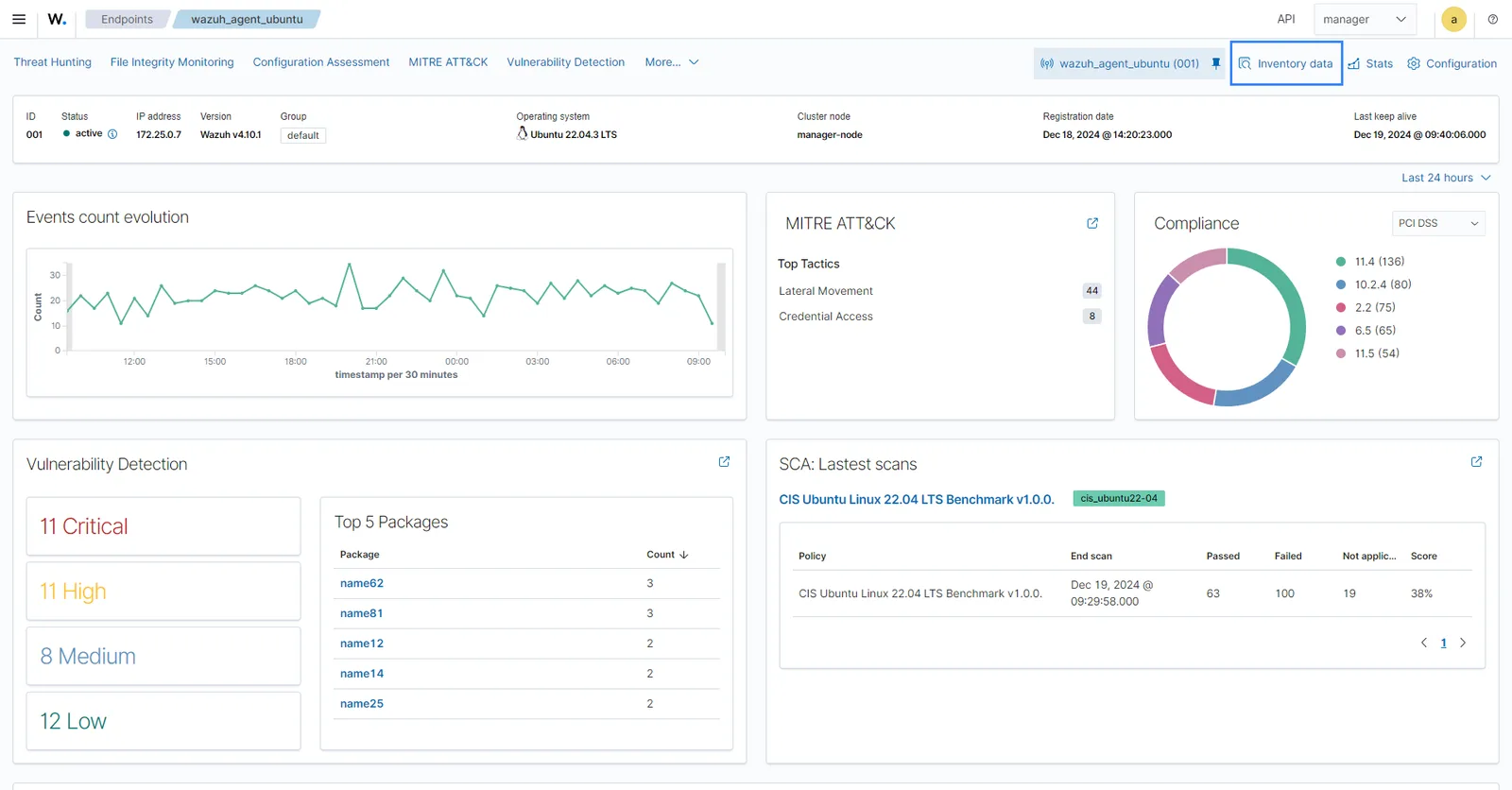
Security monitoring across Linux hosts, containers, cloud accounts, and compliance checks still creates blind spots for many teams. Wazuh open source security monitoring closes a good part of that gap with a central manager, distributed agents, and a security event dashboard. It is a practical option for teams that need threat detection, file integrity monitoring, and compliance reporting without commercial SIEM pricing.
Key points
- Wazuh is an open source security monitoring platform with a manager, agents, and an indexer/dashboard layer.
- It covers log analysis, file integrity monitoring, intrusion detection, vulnerability detection, and compliance mapping.
- Teams can run it across cloud, on-prem, and container environments without per-agent licensing fees.
What is Wazuh open source security monitoring?
Wazuh is a free, open source security monitoring platform for threat detection, integrity monitoring, incident response, and compliance. It was forked from OSSEC in 2015 and has grown into a broader platform with its own manager, agents, API, and dashboard/indexer components.
The platform collects telemetry from agents installed on monitored systems. The manager analyzes the data, matches it against rules, stores events, and raises alerts. This works for on-premises servers, cloud workloads, and container environments.
How Wazuh works
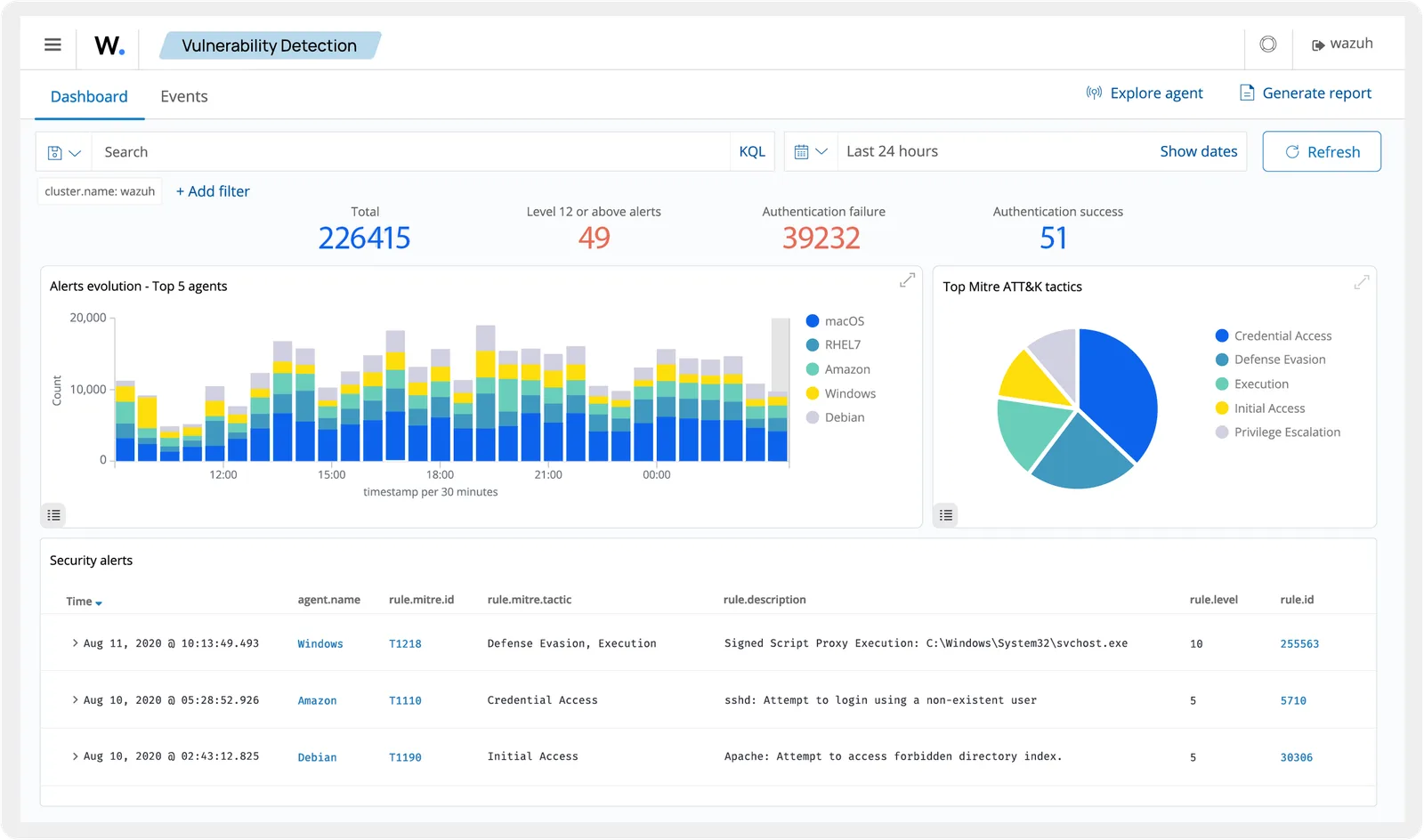
Wazuh agents collect security-related events from endpoints and send them to the central manager. The manager decodes and analyzes events through rules and policies. Security analysts use the dashboard for investigation, while the API lets engineering teams pull alerts into existing automation.
Wazuh core features
Wazuh includes several capabilities that usually sit in separate tools:
- Security analytics: real-time analysis of security events across systems.
- Intrusion detection: detection of malware, rootkits, and suspicious activity.
- Log data analysis: collection and analysis of logs from multiple sources.
- File integrity monitoring: detection of changes to critical files and directories.
- Vulnerability detection: identification of known vulnerabilities in monitored systems.
- Configuration assessment: continuous checks against security baselines.
- Incident response: active response actions and integrations for automated remediation.
- Compliance reporting: pre-built rule sets and reports for standards such as PCI DSS, GDPR, HIPAA, and NIST 800-53.
- Cloud security monitoring: native integrations with major cloud providers.
- Container security monitoring: visibility into Docker, Kubernetes, and other container environments.
Wazuh vs commercial SIEM tools
| Aspect | Wazuh | Typical commercial SIEM |
|---|---|---|
| Licensing | Open source, no per-agent license fee | Per-agent or volume-based license |
| Deployment | Self-managed manager, agents, indexer/dashboard, or Wazuh Cloud | SaaS or self-managed appliance |
| Customization | Rule files, decoders, API, custom integrations | GUI configuration, vendor-specific rule packs |
| Support | Community support and public documentation, with paid support available | Vendor support, SLAs, managed services |
| Main trade-off | Requires internal time and security engineering skill | Lower in-house effort, higher license cost |
What engineering teams get from Wazuh
Engineering teams can treat Wazuh as part of the delivery and operations stack rather than a separate audit tool.
- Visibility across the stack: Wazuh collects from system logs, application logs, containers, and cloud services into one event stream.
- DevOps integration: It can deploy with configuration management tools such as Ansible and Puppet, and it can monitor Docker and Kubernetes environments.
- API-first automation: The REST API allows alert data to flow into existing dashboards, incident tools, and automation.
- Reduced alert noise: Rules and thresholds can be tuned per environment so teams focus on actionable signals.
What security teams get from Wazuh
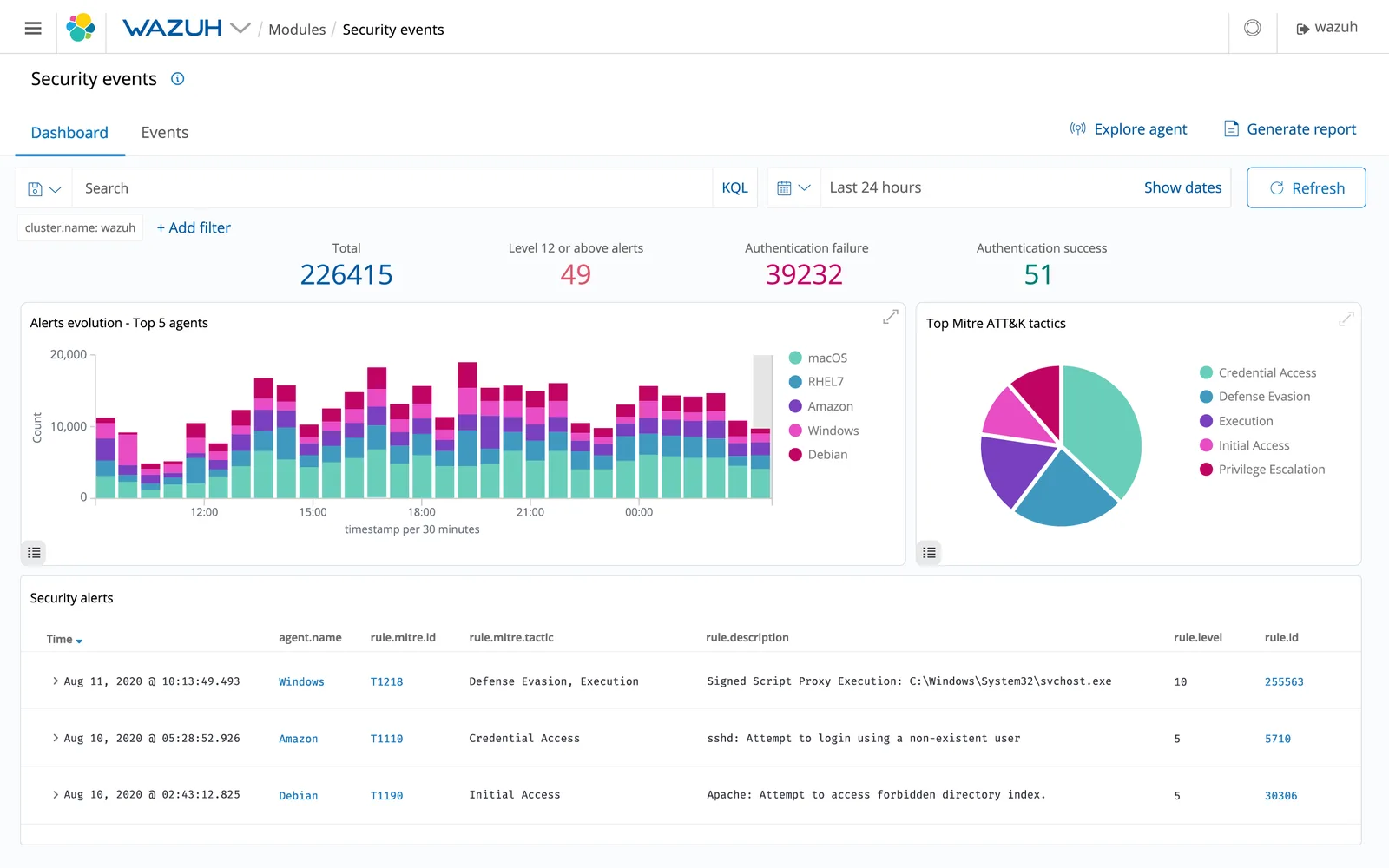
- Centralized monitoring: One control point for security events across on-prem, cloud, and hybrid infrastructure.
- Threat intelligence integration: Wazuh can consume external threat feeds to enrich events and identify known indicators.
- Incident response: Active response rules can run scripts or trigger integrations when specific events fire.
- Compliance evidence: Pre-built checks and reports support audits for PCI DSS, GDPR, HIPAA, and NIST 800-53.
Deployment and operating guidance
- Start with high-value assets and a small set of tuned rules before rolling out widely.
- Deploy agents across Linux and Windows hosts, then add cloud and container coverage.
- Integrate Wazuh with existing alerting or incident response tools so alerts are actioned.
- Customize rules based on your risk profile instead of running default thresholds forever.
- Assign clear ownership for running the manager, indexer, and agent fleet.
Cost and ownership trade-offs
Wazuh removes per-agent license cost, but it is not free to operate. Teams pay with infrastructure and engineering time. The trade-off often makes sense for organizations that have Linux and SIEM skills in house.
Self-hosted Wazuh is also not a managed service. It requires someone to operate the manager, indexer, and agent lifecycle. Plan for rule tuning, upgrades, and storage before production rollout.
FAQ
Is Wazuh actually free?
Yes. Wazuh is open source and free to download and use. Costs come from the infrastructure it runs on and the time spent tuning, operating, and maintaining it.
How does Wazuh compare to OSSEC?
Wazuh started as a fork of OSSEC and kept many core concepts while adding a broader agent/manager architecture, API, and more integrations. For new deployments, it is generally the more active and feature-complete descendant of the two.
Can Wazuh monitor Docker and Kubernetes?
Yes. Wazuh can collect logs and security events from container hosts and orchestrators, and it can audit container configuration and activity through agents and integrations.
A useful starting point is to deploy the manager and a few agents in a staging environment before touching production.